Chicken Run by Parvathi Nayar and Nayantara Nayar
WALKTHROUGH | CHICKEN RUN
InKo Centre is delighted to present, in partnership with Chennai Photo Biennale 3, curated by Arko Datto, Bhooma Padmanabhan, Boaz Levin and Kerstin Meincke, a special online walkthrough with its creators - artist, Parvathi Nayar and playwright, Nayantara Nayar.
Presented as an online exhibition at the Chennai Photo Biennale edition 3, titled Maps of Disquiet, the exhibition foregrounds an unusual story of war using the format of the fictional photo-narrative that seamlessly mixes fresh imagery, archival photos and videos. Chicken Run traces the history of the mysterious Mr H from his humble beginnings in rural Korea, through imprisonment as a Korean prisoner of war, to life in the Demilitarized Zone under the care of the Custodian Force of India (CFI), to setting up as a chicken farmer in Madras in the late 1950s.
Saturday, 19 February 2022, at 6.00 p.m. IST
Chicken Run - About the artists:
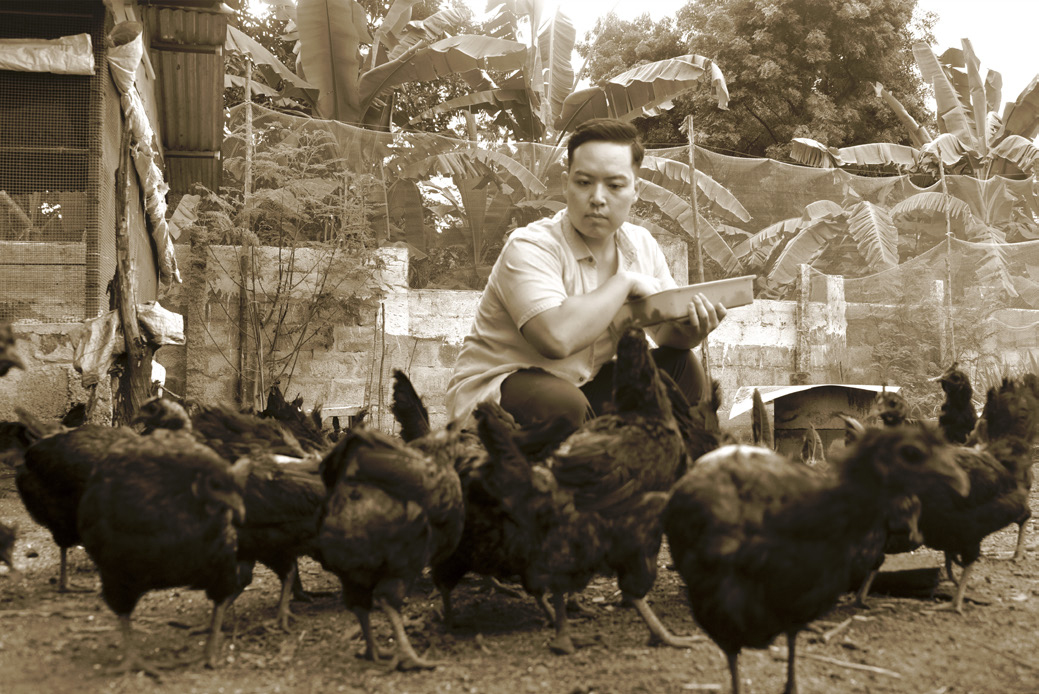
"Mr H at his Chicken Farm, Chennai, 1956" (Photo credit, Parvathi Nayar).
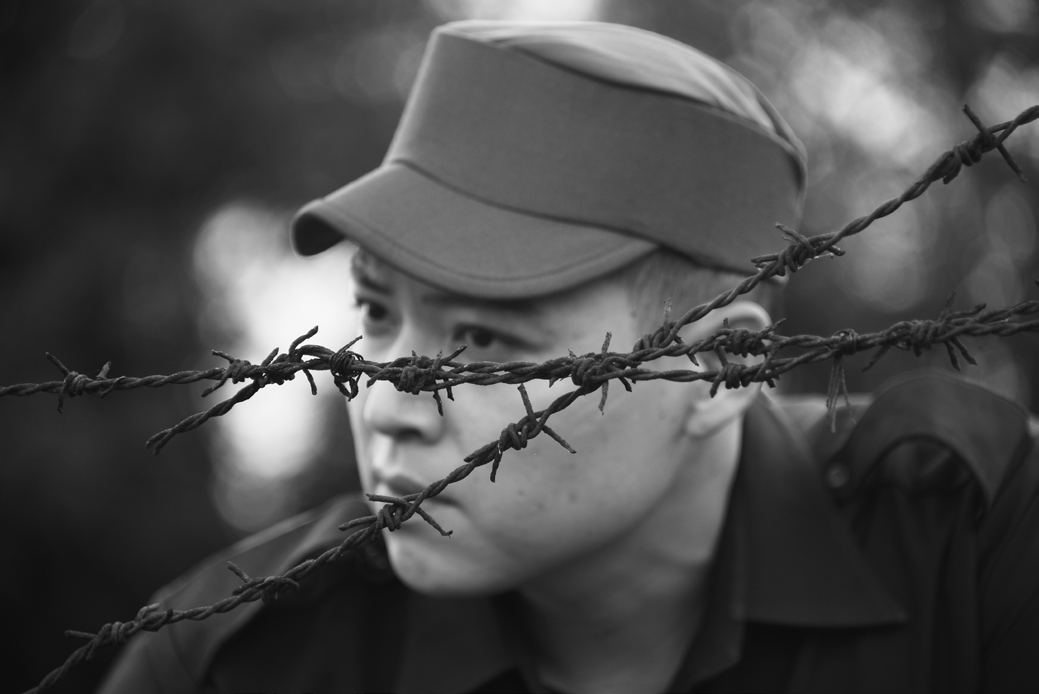 Chicken Run. (Photo credit, Parvathi Nayar).
Chicken Run - About the artists
Parvathi Nayar is a Chennai-based visual artist, writer, poet, pedagogue and speaker. Parvathi plays an active role – and is deeply committed to supporting – the emerging renaissance of the contemporary in Chennai. Parvathi is known for her installations, videos, complex drawing practices, painting and photography. Her art engages with contemporary social thinking and issues, and specifically with environmental concerns. Her black-and-white graphite drawings offers a philosophy of space, often through the prism of science and technology. Parvathi has exhibited at the Kochi-Muziris Biennale 2014/15; has worked in Jai He, India’s largest public art project located at the T2 terminal Mumbai; and was twice a TedX Speaker.
Nayantara Nayar is a performance maker, researcher and storyteller based in Chennai. She has a background in theatre and education, documentary film and sociology. Her practice looks at how to use performance and storytelling to explore larger historical time periods and socio-political issues from deeply personal perspectives. Apart from making performance, Nayantara also writes scripts. Her most recent works have included ‘The Lottery’, long-listed for the Hindu Play Writing Award 2018, and was selected for the Fringe 2019 as a part of the Traverse Theatre’s Writer’s Block programme, conducted in partnership with Rage Theatre, Mumbai. Her last solo show ‘Amma what is black pepper in Malayalam?’ was produced and performed for the University of Kent, UK. Nayantara is currently pursuing her Ph.D in the U.K.
Chicken Run by Parvathi Nayar & Nayantara Nayar
Chicken Run excavates an unusual story of war through an investigation into our histories that seamlessly mixes fresh imagery and archival photos.
The web-based installation is based on the notes and images collected by Curator P for an upcoming exhibition at the People’s Museum of Chennai, relating to Mr H. The mysterious Mr H was a Korean prisoner of War, who did not want to return to his home country when the Armistice Agreement halted the Korean War in 1953.
Chicken Run’s fictional photo-narrative traces his history from humble beginnings in rural Korea, through imprisonment as a Korean prisoner of war, to life in the Demilitarised Zone under the care of the CFI (Custodian Forces of India), to setting up as a chicken farmer in Madras in the late 1950s.
Curator P’s fascination with Mr H stems from the fact that her father was one of the soldiers who went with the CFI, to Korea, to sort out the Prisoner of War impasse. While the signing of the Armistice Agreement had brought an end to war, it was a fragile peace. Many including Pandit Nehru, feared World War III, given that the major superpowers of the world were involved in this war on Korean soil.
The United Nations took a hand in settling the issue of the non-repatriate POW issue with neutral India becoming both the Chairman of the Neutral Nations Repatriate Committee, and also sending 6000 army soldiers as the CFI to take care of the prisoners.
Brief background to the Limits of Change project
The Korean War is often called the 'Forgotten War'. While this is in reference to America's more overt fascination with stories from Vietnam, many aspects including India’s role as peacekeepers does seem to be largely forgotten. And yet it has effects that rippled out into the world and influenced everything from American air force strategies to India's relationship to the United Nations and ideas of 'Neutrality'.
Limits of Change is a project that seeks to highlight some of those effects, particularly the stranger and more unpredictable consequences of war: of lives displaced, plans undone, and identity interrupted. As India’s involvement in Korea in a concrete sense - ie the sailing of ships that carried the CFI - began and concluded in Chennai, this city becomes a cartographic marker as well.
It is noteworthy that the chief countries included in Limits of Change project were colonised – India by the British, and Korea by Japan. Colonialism, in latent and obvious ways has shaped the psyche of its peoples and their history.
The project started from a note of autobiography – Parvathi’s father (Nayantara’s grandfather) went with General Thorat on the CFI’s reconnaissance of Korea and stayed on till the completion of the CFI’s mission there. Chicken Run uses his archival material extensively. However the arc of the narrative, while based closely on the facts of the time, is entirely fictional. Fiction can tell the truest stories of our troubled times and the notes of hope we can gather from them.
Stories from A Forgotten War
Chicken Run by Parvathi Nayar & Nayantara Nayar at the Chennai Photo Biennale