


Clik | Edition 53 | February 2026.
We are delighted to connect with you through live events at physical spaces or virtually at the click of a button! We invite you to join us, whenever you are ready, or from wherever you are, on myriad creative journeys, where with valued partners in India and in Korea, we explore new pathways and experiences, the magic of live performances and exhibitions or engage with those newly imagined from creation to reception and distribution on digital platforms. We invite you to evocative journeys and sensory experiences that though moored in local culture, connect and resonate with audiences worldwide!
We hope, with this e-digest, to stay meaningfully connected with you, to discover and engage with the unique, local characteristics as well as the shared, global dimensions of the dynamic, ongoing intercultural dialogue between India and Korea.
Presented by
In collaboration with
The Imprints Film Festival unfolds as a meeting ground for cinema, conversation and performance. Presented by InKo Centre and mentored and produced by Rough Edges under the Uncode Fellowships, the Festival brings together filmmakers, artists, historians, practitioners and scholars to share films, engage in dialogue and reflect creatively on the many textures of gendered lives and experiences.
The Festival offers a specially curated set of films and stories that focus on poignant explorations of a range of complex and interconnected gendered experiences, celebrating the diversities of our beings, our individual and collective desires, resistances and solidarities, even as they engage with questions around film practice, the act of looking through the camera and finding and framing the everyday stories of women, trans and queer folks, often invisiblised, erased or homogenised.
The screening will be complemented with robust panel discussions and conversations, including some of the most prominent voices who engage with themes of cultural identity, the compulsion to belong in contemporary society, gender and sexuality and the challenge of redefining the boundaries of bonding, friendship and relationships.
Fowzia Fathima
V. Geetha
Uma Vangal
V. Prabakaran
Malini Jeevarathnam
Harish Subramanian
Dr. D. Punitha
Shalin Maria
Lawrence
Dr. Chitraa Venkey
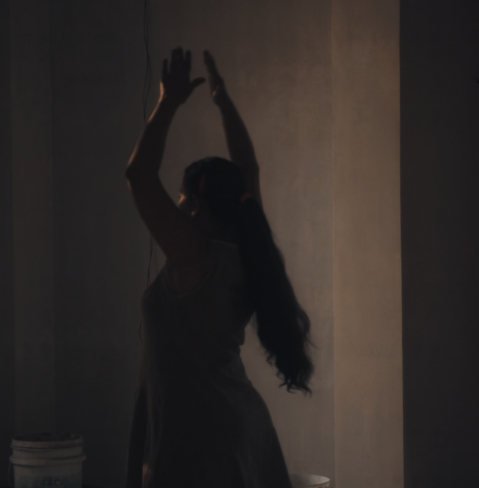
The Festival includes a performance titled Naan Oru pen by Sowmiya to complement and counterpoint the screening and discussions. A thought-provoking presentation directed by A. Mangai that challenges stereotypes and encourages reflection and invites questions to push the conversation further forward.
Uma Vangal, Ridhima Mehra and Tulika Srivastava
The lives, loves and longings of young and old alike are fascinating studies of human behaviour in the face of loneliness,
disapproval of unconventional choices, the failure of relationships and so on and such stories provide food for
thought, introspection and self-reflection. Some people go on to find happiness, friendship and family - in all their
varied dimensions and definitions. Filmmakers often deal with the themes of cultural identity, the compulsion to belong
in contemporary society, gender and sexuality and the challenges of bonding, friendship, forbidden love, long buried
memories, unusual networks of care and friendships and their need to document the ways in which these social
phenomena collide, are created and are sustained from a driving force behind their work. The dilemmas they face are
nothing compared to the challenges and trials, the experiences, the battles, the successes/failures and the lives of the
people about whom these films are made. Amidst such dilemmas, the Uncode Fellowships (2022–2024) were an
initiative of Rough Edges to mentor filmmakers (both aspiring and established) of varied genders and across locations.
And what's more, they produced these films. They supported the filmmakers as they grappled with the subjects,
themes and treatments and worked on capturing and sharing their lived experiences through filmic narratives. The
result - 10 documentary films - as interesting and diverse as their makers - each offering glimpses of people who found
their way through different struggles and challenges. imprints by Rough Edges is a different film festival that brings this
package of personal films and hopes to leave some imprints not just on our visual aesthetics and cinematic sensibilities
but also on the minds of the participants. It was a journey of discovery and introspection for me watching these films
and finding the intersecting lines of emotions, experiences and explorations that created a seamless connection across
all the protagonists and their journeys. As a filmmaker who grapples with these very challenges of representation, it
felt personal and productive. It gives me immense joy to put this festival together and showcase these films and
filmmakers to the Chennai audience.
-Uma Vangal
Taking on from Maya Angelou’s Phenomenal Woman and Still I Rise, this solo performance presents an embodied narration of un-making the body, lived experience and resilience of queerness, especially of a trans – life in India. This is our tribute to Maya Angelou and her life that stood for intersectionality of race, class, gender, sexuality, civil rights and environmental justice. ‘Out of the huts of history’s shame’ this woman rises armed with the ancestral gifts. She comes knowing herself, knowing the need for dignity and self-care.
The skin of our body, desires, pains, our dress and accessories bundle us up in multiple ways. When we can ‘unmake’ these layers and be ourselves, we ‘live’. We stage this ‘return to home’; we wish to recognise our nurturing nests; no one is ever by oneself on this earth.
- A. Mangai, Director, Naan oru pen
Sowmiya is a theatre artist with over 15 years of experience on stage. She works with Kattiyakkari and Marappachi theatre groups. From her debut in Bama’s short story Molagapodi adapted for stage by Srijith Sundaram, she has performed Manto’s Shame, Manjal – a play that dealt with the plight of manual scavengers, Nooramma Biriyani Darbar to mention a few. Theatre has helped her travel to many cities in India. Even during the lockdown, it was the online performance of One Can Only Laugh that kept her spirits together. She did the lead role in Marappachi’s Stree Parvam in 2024 and opened Naan Oru Pen, based on Maya Angelou’s poems ‘Still I rise’ and ‘Phenomenal Woman’ for the Chennai Pride - 2024. She considers her experiences of being part of the Trans Kitchen during the pandemic transformative. She has a vibrant tic-tok and Reels presence and has also been part of feature and short films.
A. Mangai is the pseudonym of Dr. V. Padma. She retired as Associate Professor in English from Stella Maris College, Chennai. She has been actively engaged in Tamil theatre as an actor, director and playwright for almost four decades, through which she has directed over forty plays, all of which deal with women–centred themes and characters. She hopes that her academic, activist and artistic selves can find a vibrant intersection. A bilingual writer, her fields of interest are theatre, gender and translation studies. Her Kaala Kanavu (A Dream of Time) is a docu- drama on the feminist history of Tamil Nadu scripted by the feminist historian V. Geetha. She is also interested in classical Tamil literature from a contemporary perspective of gender, ecology and culture. To make theatre the voice of the voiceless, the marginalised, is her passion. She has evolved eight plays with the Suriya Women’s Cultural Group in Batticaloa, Sri Lanka, while her work with the transgender community over the past two decades has helped form Kannadi Kalai Kuzhu. Her Acting Up: Gender and Theatre in India 1979 Onwards has been published by LeftWord, New Delhi. She has also translated Sudhanva Deshpande’s Halla Bol, a memoir of Safdar Hashmi into Tamil. Her most recent translation is Volga to Ganges in Tamil for a people's edition.
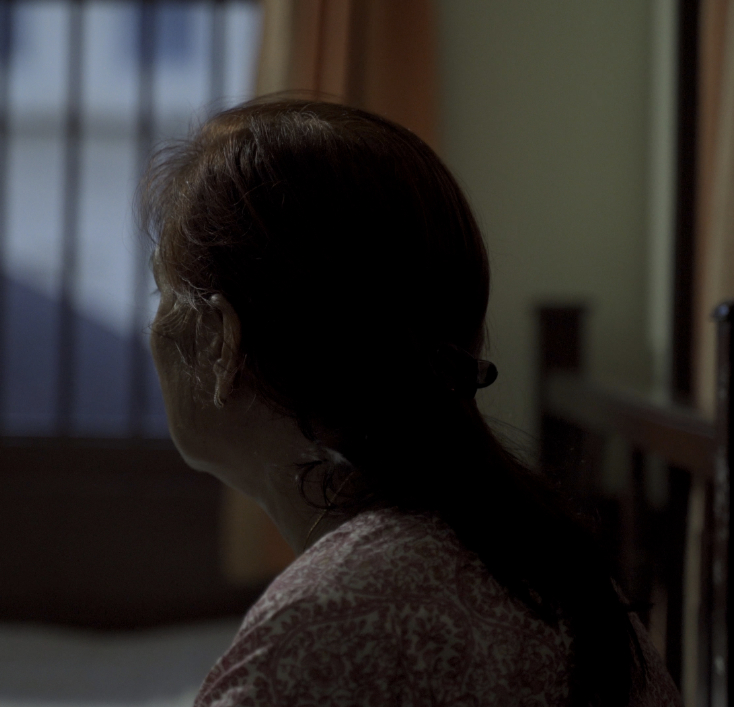
She recalls the memory of her first home in Nagaland, each memory a lingering echo of displacement. Is visiting her homeland a moment of rootedness or a reminder that belonging remains elusive?
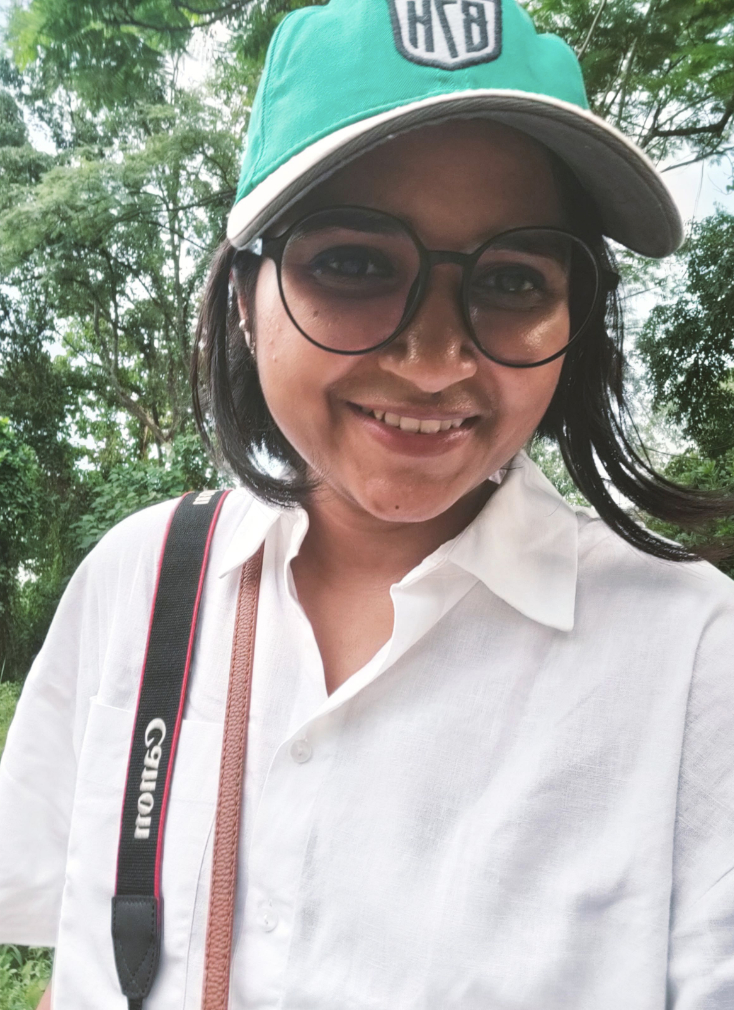
Aprajita is an independent filmmaker and artist driven by her curiosity for novel artistic expressions. Her narratives explore themes of gender, urban and rural migration and technology. The core of her practice draws inspiration from lived experiences and the resilience of people navigating through their lives. Growing up in a small town in Uttar Pradesh, she deeply reflects on personal narratives and takes a keen interest in the nuances of home and belonging. Her student film Jaagte Khwaab explores the theme of identity and sexuality, screened at the Dharamshala International Film Festival, 2023.
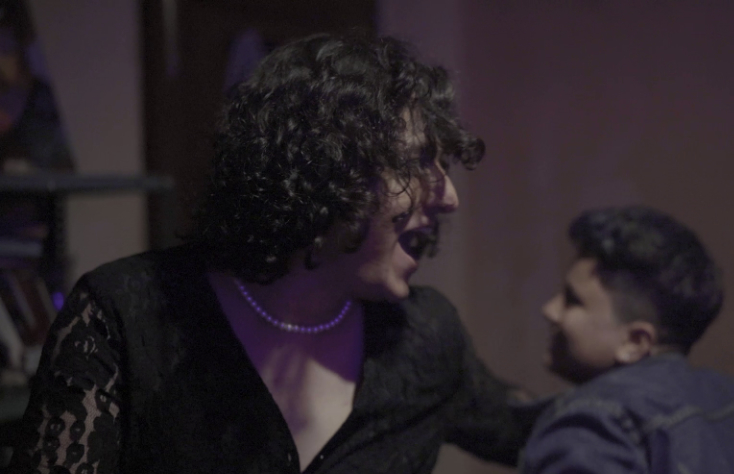
Inside the walls of B25 is a sanctuary where lives intersect, stories intertwine and people flourish. The film offers glimpses of these unconventional bonds and experiences, that reframe notions of home and belonging, while reflecting on queerness, love, chosen families, gender, violence, identity and freedom, against the backdrop of a rapidly changing India.
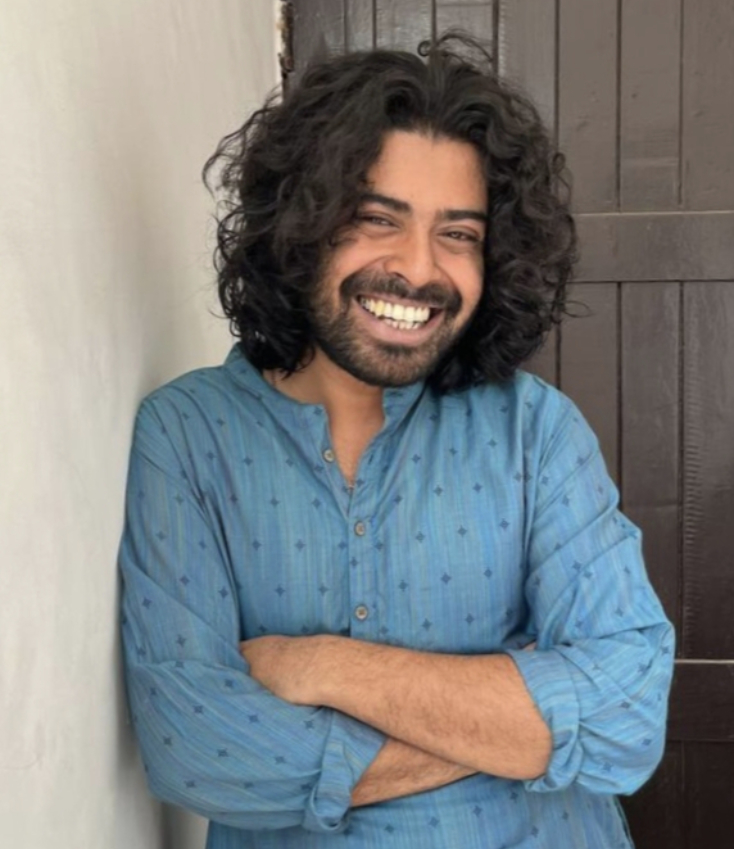
Raqeeb is a writer, photographer, filmmaker and researcher from Kolkata, based in Delhi, whose work revolves around redefining masculinity in the Indian context, with a focus on queer intimacies and identities. Nominated twice as the LGBTQIA+ Voice of the Year at the Cosmo India Blogger Awards, he is currently pursuing his PhD on queerness, films and family. Raqeeb has exhibited his photographic work at several platforms, including Kala Ghoda Arts Festival, Mumbai, and Khoj Studios, Delhi.
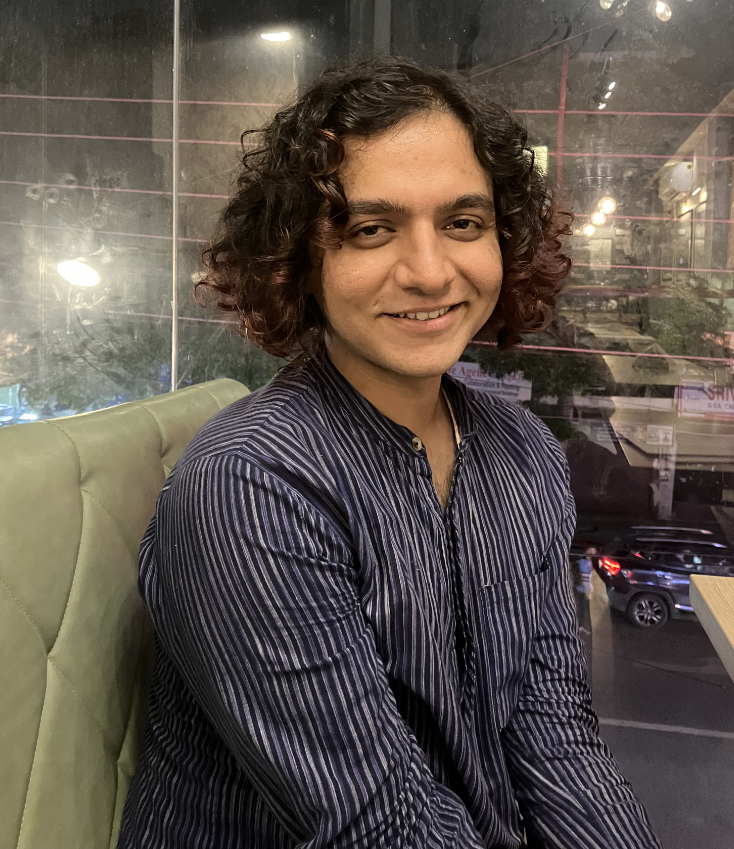
Manvendra/ Noor is a queer artist, researcher and performer pursuing a PhD in Literature with a specialisation in Intermedial Studies at the Université de Montréal. With a background in Performance Studies from Ambedkar University, Delhi, their work explores the intersections of performance, archives, language and social inquiry, focusing on queerness and home-making. They engage with both real-time performance and virtual archives as ways of documenting and reimagining belonging. Beyond performance, Manvendra writes, draws and works with languages, as part of their academic and artistic practice. Influenced by migration and spatial belonging, their work is rooted in everyday experiences and artistic research.
A conversation between two women about making a film on caste. How does one show the ordinary, viscerally? How do you use the camera to reveal structures of power and, maybe, even take back some power for ourselves? How does image-making help us negotiate, question and reflect on our differences? And as documentarians, how do we film caste? What do we show? What do we hide? Who has access? Who refrains? Shot on mobile-phone cameras in western Uttar Pradesh, the film seeks to explore the positions of the two women, Rajkumari, a social activist from Lalitpur UP and Ruchika, a documentary filmmaker and educator from New Delhi, within the stratified structure of caste.
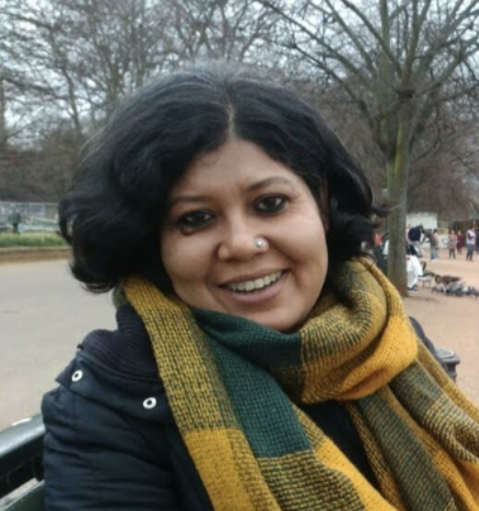
Ruchika Negi is a filmmaker, educator and visual artist with an interest in arts-based pedagogical “practices.” Some of her films include Malegaon Times, Every Time You Tell a Story and Two Autumns in Wyszogrod. She has been awarded artistic residencies at the Centre for Contemporary Art, Warsaw; PAV Centre for Contemporary Art, Turin and Khoj Studios, Delhi. She is also a recipient of the Charles Wallace Short Term Grant and a Research and Documentation grant from the India Foundation for the Arts. Her works have been exhibited at various Festivals and art platforms, the most recent being the Kochi Muziris Biennale. She has been teaching documentary cinema in various universities and informal spaces and currently leads the Learning Lab, an arts-based pedagogical platform of the feminist think tank, The Third Eye.
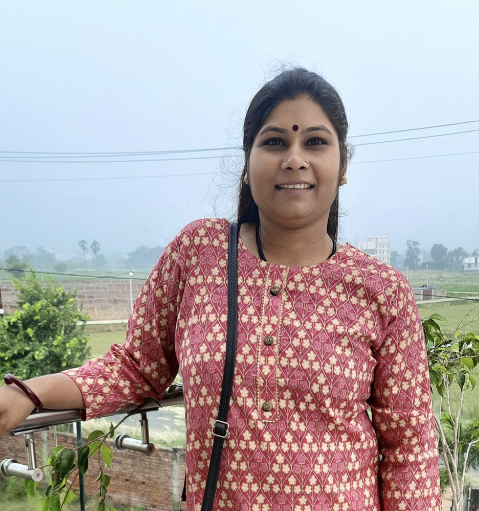
Rajkumari Prajapati is a social activist embedded in the grassroots women's collective, Sahjani Shiksha Kendra, in western Uttar Pradesh, for over two decades. She is also a part of the feminist think tank, The Third Eye's Learning Lab, an arts based pedagogical platform. She was one of the filmmakers in the collaborative film project, Raat (Night time in small time India), that has travelled to various national and international film Festivals, university fora and cultural Festivals since its release and won the Gender Sensitivity Award at the Dharamshala International Film Festival.
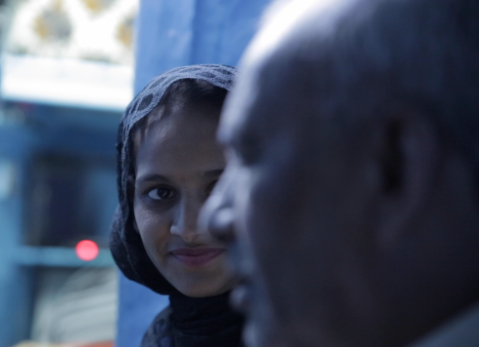
Gulnaaz remains committed to using community radio to shed light on injustices and oppressions faced by marginalised communities, despite constant scrutiny and control by her family and community. Through her empathetic storytelling, she brings attention to untold narratives and advocates for unity and harmony. Amidst her fight for social change, Gulnaaz grapples with her own struggles for freedom and autonomy. This is the story of a young Muslim woman dreaming differently in a patriarchal society determined to silence her.
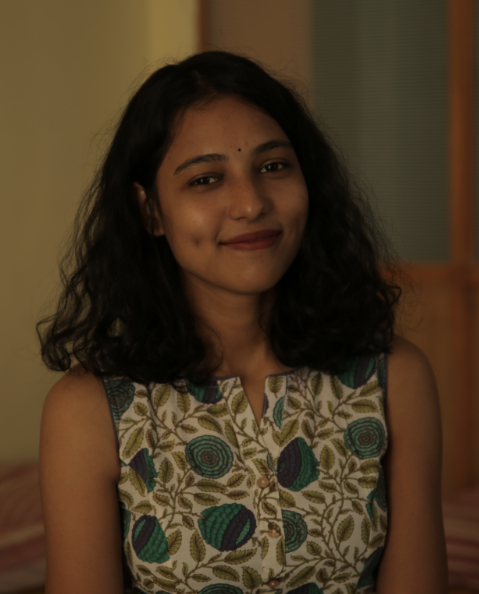
Rafina Khatun is a filmmaker and editor, dedicated to amplifying the voices of women through her work. With a degree in Journalism and Mass Communication from Calcutta University, she has honed her skills by assisting renowned filmmakers like Debalina, Susmita Sinha, Sankhajit Biswas, Farha Khatun and Baudhyan Mukherji on various documentary and fiction projects. In 2021, Rafina was awarded the prestigious Third Eye Fellowship from Nirantar Trust, which enabled her to create her debut film A Journey to Home, which intimately explores the unfulfilled dreams of her family members. She has worked with Drishti in Ahmedabad, where she edited films and actively participated in community skill training programmes. Currently, she is pursuing Editing at SRFTI.
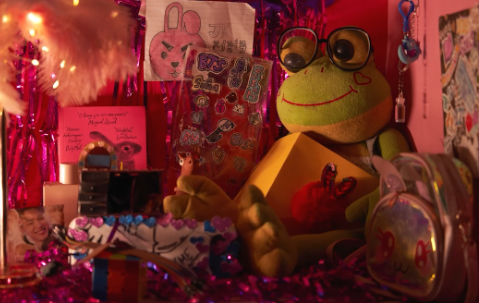
Alsana lives in a small, chaotic neighbourhood in Ahmedabad, cut off from the rest of the city by an 85 acre landfill on one side and a highway on the other. A room of one’s own is hard to come by, but Alsana has a corner where only her rules apply. It takes on different forms - each an expression of her inner life, at odds with the world. Meanwhile, Alsana’s drawings show signs of the society seeping in, as she grapples with her identity and conflicts closer to home.
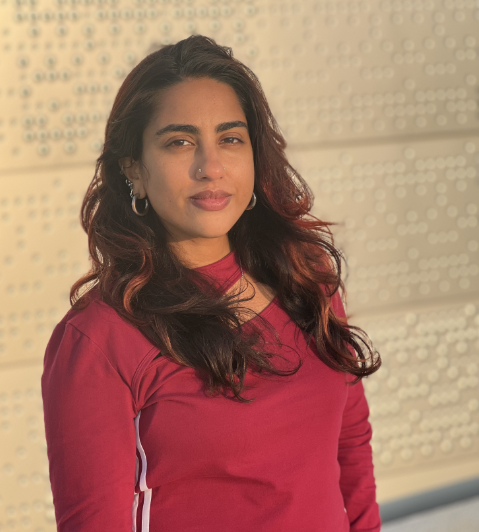
Nikita Parikh came to filmmaking through working with children. She traveled to classrooms across the country making videos for Teach for India, an NGO which works in government and low-income private schools. During her Master’s degree in Education at the Tata Institute of Social Sciences, Mumbai, she started researching and using participatory media with teenagers. She is driven by creating films which promote understanding, empathy and change.
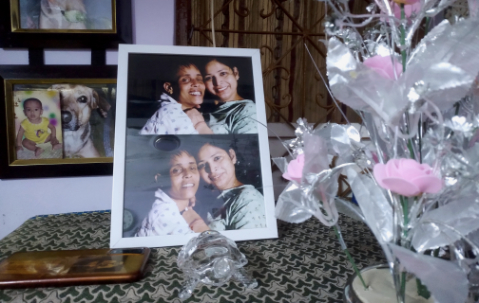
Pari attempts to describe an event in the days of Pari and Praveen, a violent rupture that allowed in a life held by desire and not duty. In this film, they recount their love story against the undertones and backdrop of threat and violence. The present is both fraught and romantic; the disruption of a past moment finds momentary comfort in recall; the future is hopeful.
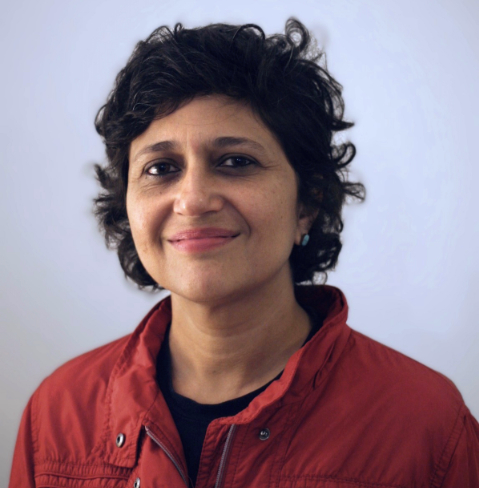
Priya Sen is an independent filmmaker and artist who works across film and video, sound and installation. Her work explores forms for tenuousness and ambiguity within realist documentary and simultaneously plays with narrative modes and cinematic gestures. She is interested in eclectic, itinerant and egalitarian film forms and the manners of presence that accompany each work. With an MA from Jamia Millia Islamia, Delhi and an MFA from Temple University, Philadelphia, Sen has taught and facilitated nonfiction and experimental film and video practice in various institutions and social contexts. Her films have screened at Festivals and venues that include Forum Expanded Berlinale, BFI London Film Festival, Dharamshala International Film Festival, IDSFFK Kerala, Outfest LA, Bangalore Queer Film Festival, Kochi Biennale, Experimenta and IAWRT among others. She was a 2023-24 Radcliffe Fellow at the Harvard Radcliffe Institute.
Umbro, the threshold of a home, is the liminal space that speaks to the lives of women, including the filmmaker's mother and her friends who live in the small town of Dhrangadhra in central Gujarat, India. The film explores joyful friendships among women, often dismissed and unsung, carrying in them moments of shared stories, solidarities, conflicts and, most of all, routine acts of resistance. Umbro attempts to locate these flights of desire in the everyday, while celebrating the women’s indomitable love for life and each other
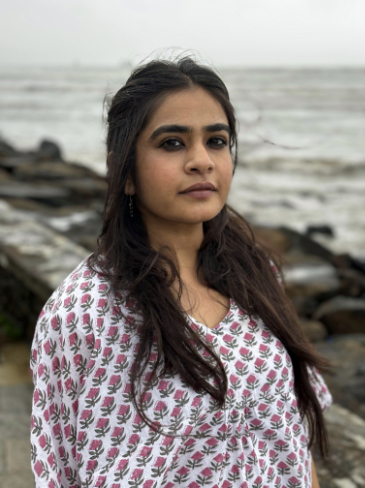
Prachee Bajania is a filmmaker, editor and writer based in Gujarat. An alumna of the National Institute of Design, Ahmedabad and the Film and Television Institute of India, Pune, Prachee has been making films since 2011. Her interest in history, poetry, life sciences and the ordinary influences her film work. Her film Umbro (The Threshold) won the ReelFocus Award for Best Documentary at the 14th Beijing International Film Festival and Second Best Film, Short Documentary at the 16th International Documentary and Short Film Festival of Kerala, 2024. Prachee’s films have been shown at many national and international film festivals and institutions.
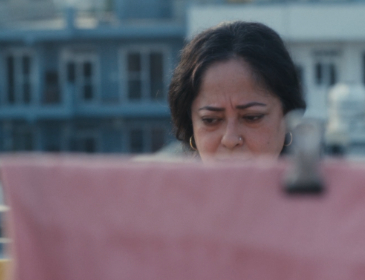
Priya, 50, makes her maiden trip to the sea. At dusk, she stands at the shore and overlooks the vast horizon. In a distant part of the world, Raag, 20s, is in a taxi which passes the Busan metropolitan area. A fragmented voice-over unfolds the fractured yet tender relationship the two share with each other. Raag asks her why she let her in-laws change her name. Priya responds that there wasn’t much of a choice given to her. In a scene from the past, Raag takes Priya’s pictures while she’s washing clothes. They head to the rooftop to spread out clothes for drying where Priya confronts Raag about his sexual orientation. Raag feels taken back. He averts her gaze and in doing so ends up coming out to each other. Later in the day, Raag realises that Priya was coming out to him instead. At the beach, Priya lets the ocean swallow her. Raag reaches home and reflects upon his mother’s happy marriage.
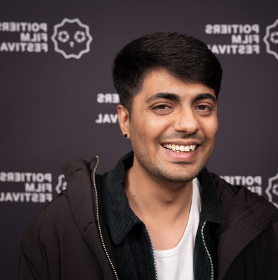
Aakash Chhabra is a writer and director based in Panipat, India. He is an alumnus of the Red Sea Director's Program 2025, CHANEL X BIFF Asian Film Academy 2024 - Motion Picture Association Award, Busan Asian Film School (AFiS) 2022 - Best Project Award, Satyajit Ray Film & Television Institute 2020 and Locarno Documentary Summer School 2019.
His shorts have screened at festivals in Busan, Winterthur, Poitiers, Tehran, Kerala, Oberhausen and Dharamshala. His debut short MINTGUMRI (2021) was nominated for the FCG Critics’ Choice Awards 2022 while his short documentary A WINTER’S ELEGY (2022) featured on the Sight and Sound Magazine’s list of Best Video Essays 2022. ERRANDS (2024) was produced by the Busan International Film Festival while WARM SHADOWS (2025) will premiere later this year on Nowness.
He is presently working on his feature-length debut I’LL SMILE IN SEPTEMBER which was developed at the Torino Film Lab - Red Sea Lodge 2024, Autumn Meeting 2024 and Produire au Sud Nantes 2022. It has participated in the Asian Project Market 2023, NFDC Film Bazaar 2024 QCinema Project Market 2024 and Red Sea Souk 2024. He is a recipient of the reFrame Genderalities film fellowship 2021-22 and the Rough Edges Uncode Fellowship 2022-23.
Rough Edges facilitates multidisciplinary feminist cultural research, knowledge production, narrative building, archiving and education through creative documentary films and storytelling by women, trans and queer artists. The initiative is grounded in a commitment to intersectional gender justice, solidarity and affirmative social change.
Rough Edges enables, mentors, produces and disseminates imaginative documentary films on gendered lives and living, exploring diverse, intersecting and complex realities. Through the making and sharing of films, the initiative engages deeply with intention, perspective, process, form and expression and with how these resonate within a structurally intricate and unequal world.
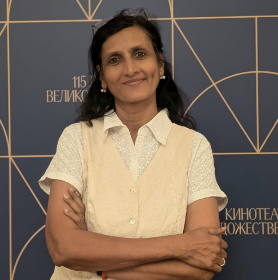
Uma Vangal teaches film writing, film production, film studies, journalism and media studies in India and the US. Currently a professor at the International Institute of Film and Culture, Chennai where she teaches narratology, Popular Culture and Film and supervises scripts. As an adjunct faculty member at the Asian College of Journalism in Chennai, she teaches courses on cinema and culture. As a visiting professor if film and affiliated scholar at the Department of dance, drama and film, Kenyon College, Ohio, she has taught Community engaged learning film courses and works on Documentary films. Her area of specialisation is Gender and Film, Women and media and Film appreciation.
A two time Fulbright scholar, she taught at Kenyon College, Ohio, she has taught Indian popular cinema, Women in Film in South Asia, the Documentary, writing the short fiction film and Directing for Camera.
Her documentary journey began with I am Akku, She is Leela a film on the fight by two Dalit women for their rightful compensation from the Karnataka government that was instrumental in winning them the case in the Supreme Court.
Her historical docu A saga of excellence to celebrate the sesquicentennial year of the University of Madras was released by then President Shri Abdul Kalam and received by the then Chief Minister M Karunanidhi.
Her most recent film In God we trust is an outsider's inside view of an Amish family in Ohio and was screened extensively in the US and India as part of the Reverse Gaze project of the 75th year Fulbright Foundation celebration. An ethnographic film, it was the official selection at the Amsterdam Global Lift off Film Festival, The LA independent Women's film festival awards, nominated at the Faith in Film Festival and featured in the Montage section of the 2nd Eikoigi International Film Festival, Manipur.
The Fitmus test formulated by her has been presented at TedX talk and is being used by many doctoral scholars to study films.
She is currently editing 2 of her documentary films and researching the global gaze and the representation of South Asian women on screen.
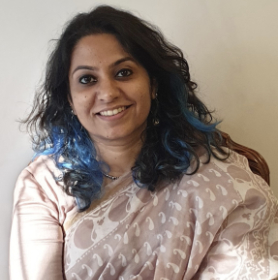
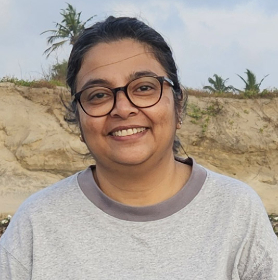
Rough Edges is the an initiative of Ridhima Mehra and Tulika Srivastava, who together bring over twenty-five years of experience at the intersection of documentary filmmaking and social change. Their work draws on an extensive engagement with the Public Service Broadcasting Trust, where they led the commissioning, creative realisation and outreach of more than 700 documentary films spanning diverse artistic forms, subjects and voices.
These films have travelled widely across the world, with over 2,000 festival selections and 350 awards, including thirty National Film Awards, as well as screenings and honours at major international platforms such as the Oscars, Berlinale, Rotterdam, Oberhausen, Yamagata, Busan and Sheffield. Many of these works continue to be actively used in local, national and international contexts for advocacy and dialogue. Ridhima and Tulika also curated films, conversations, exhibitions and documentary trainings for fourteen editions of the annual international documentary festival, Open Frame, fostering critical reflection on multiple lived realities.
In recent years, their work has expanded to commissioning and mentoring genderfocused projects across a range of media, including performance, graphic narratives, mixed-media works, podcasts and installations. They have also curated creative training resources on gender-based violence and served as jurors at film festivals.
Their practice is informed by a deep belief in collective energies and shared vision that inspire, sustain and activate independent creative and cinematic work, as well as its dissemination and advocacy. Rough Edges is supported by an Advisory Team of diverse and experienced feminist activists, artists and practitioners, who help shape and guide its creative, philosophical, political and institutional directions—enriching perspectives and strengthening the initiative’s work.
Entrance is free. Registration required. Seating will be on a first-come, first-served basis.
To register please visit: https://forms.gle/i5J11mAyTXQnujHK9
For full schedule of the programme, please visit: https://inkocentre.org/imprints_flim_festival.html
For further information, please contact InKo Centre - T: 044 24361224; E: enquiries@inkocentre.org
Presented by
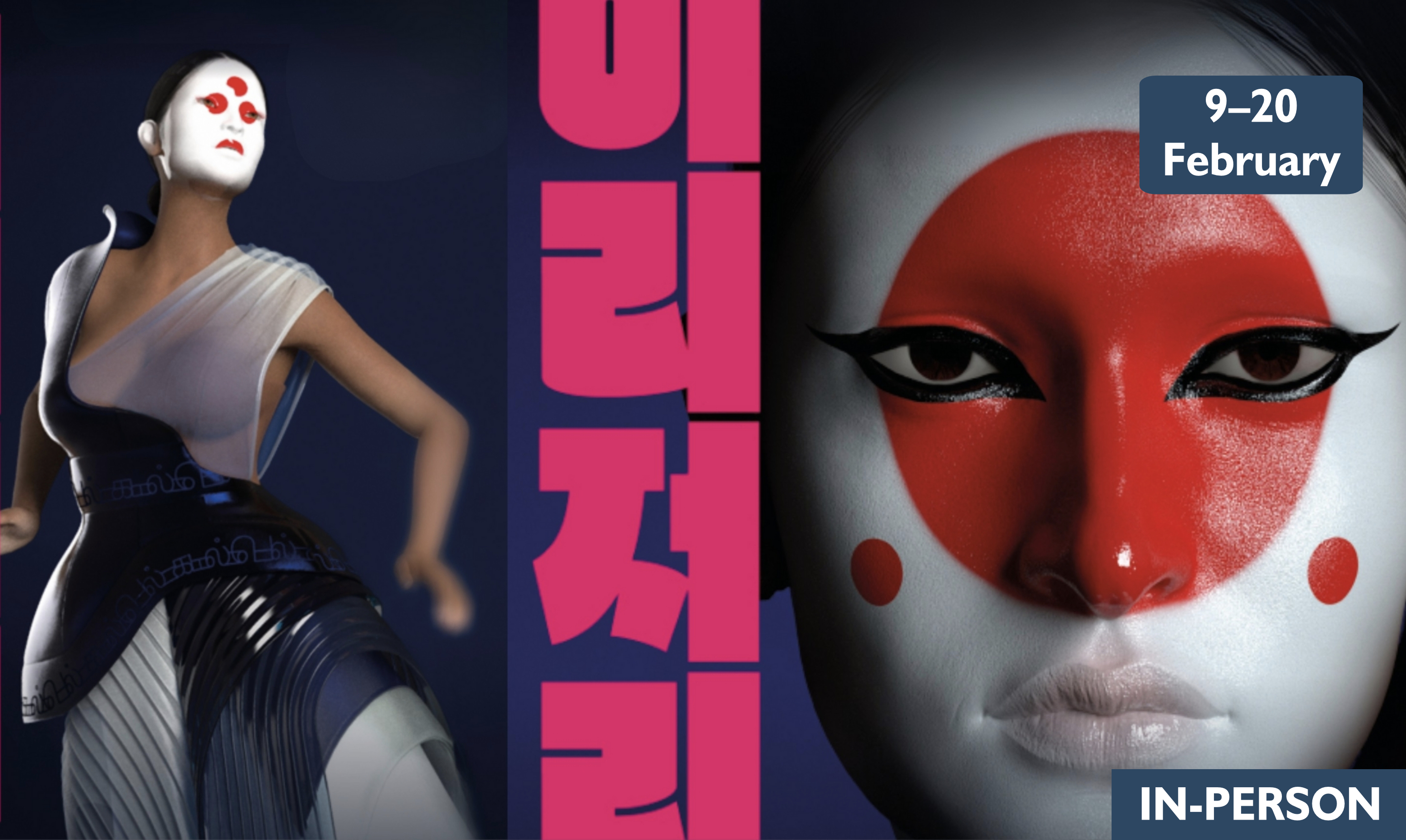
Ili-jeoli is a collaborative digital art exhibition by Sam Madhu and Seoyoon Yoon that explores a visual dialogue between Indian and Korean concepts of beauty. Working across borders through virtual collaboration, the artists combine elements such as makeup, jewellery, clothing and digital fashion to imagine new aesthetic futures. The exhibition reflects on hybridity, experimentation and cultural exchange, questioning dominant ideas of what is considered normal or beautiful. The title Ili-jeoli, meaning back and forth in Korean, captures the ongoing exchange between two artists, cultures and visual traditions.
Set within a digitally immersive environment, Ili-jeoli transforms the gallery into a space of moving images, sound and light. All artworks are presented as animated loops, projected across multiple surfaces to create an enveloping visual experience. Drawing from Korean and Indian beauty practices, the exhibition merges tradition with futurism through CGI, 3D modelling and digital fashion. A red spotlight referencing Yeonji and Gonji further anchors the exhibition thematically. The exhibition foregrounds collaboration, virtual exchange and reimagined cultural identities in a shared digital future.
Samyukta Madhu
Seoyoon Yoon
Sam Madhu is a digital artist living between Berlin and India. Originally from Chennai, she studied Design and Technology at Parsons School of Design, New York. Working primarily with CGI tools, her practice explores themes of feminism, futurism and South Asian beauty. Her works in Ili-jeoli use digitally rendered portraits to question representation, identity and aesthetic norms.
Seoyoon Yoon is a fashion designer based in Seoul, South Korea. She studied Fashion Design at AMFI, Amsterdam, and works across both digital and physical fashion worlds. Using CLO3D, she creates digitally rendered garments that merge traditional aesthetics with contemporary form. Her practice is guided by the philosophy of creating newness from tradition.
Ili-jeoli emerges from a sustained virtual exchange between two artists who have never met in person. Through a back-and-forth process of discussion, experimentation and revision, the works imagine how Indian and Korean aesthetics might intersect in a shared digital future. The project invites viewers to rethink beauty as fluid, playful and culturally hybrid.
Monday, 9 February 2026 at 6.00 p.m. at the Gallery @ InKo Centre.
On view until Friday, 20 February 2026.
(except Sundays and published holidays).
For further information, please contact InKo Centre - T: 044 24361224; E: enquiries@inkocentre.org
Presented by
Sponsored by






Hospitality Partner

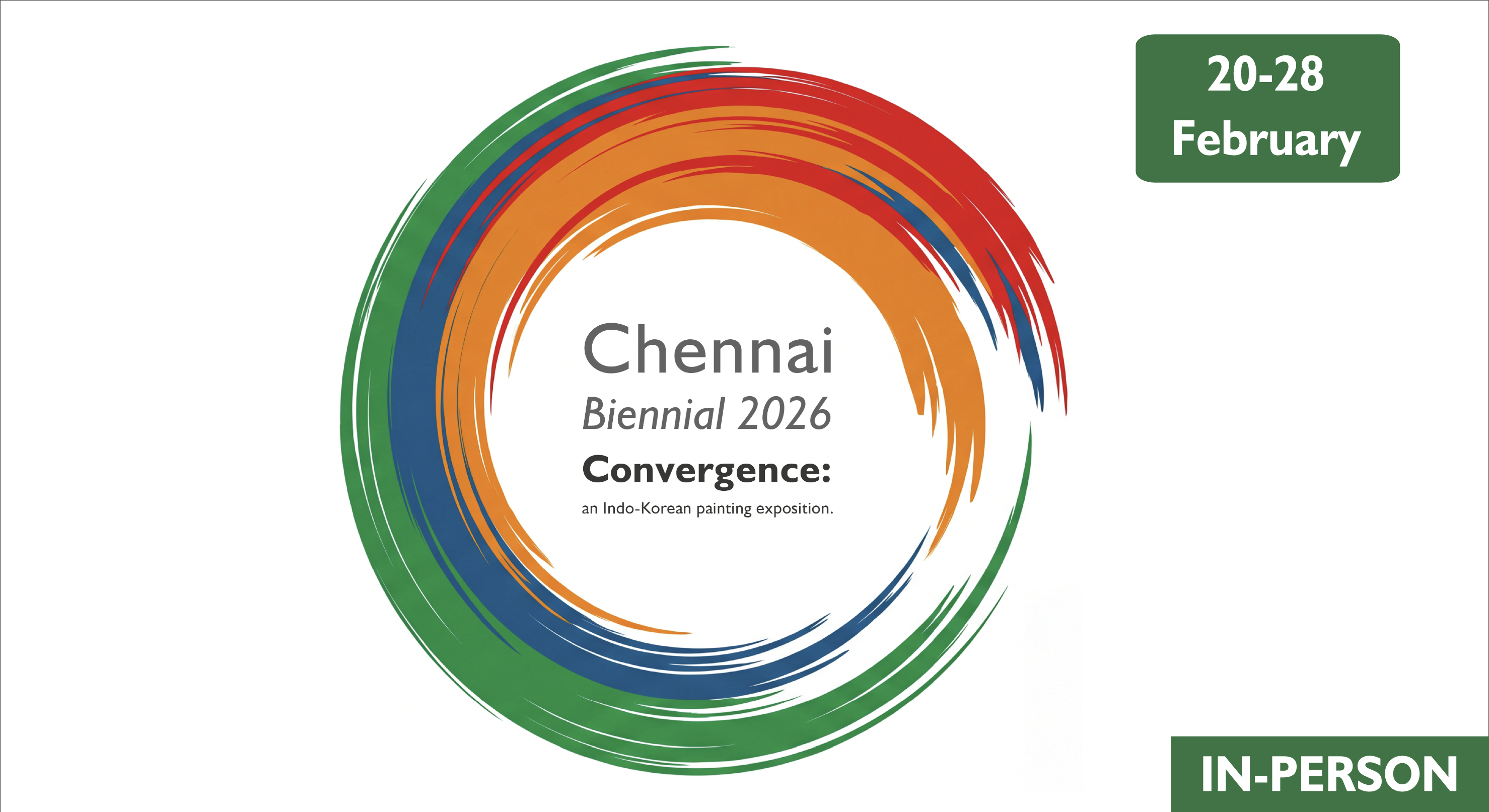
The Chennai Biennial 2026, titled Convergence: an Indo-Korean painting exposition is the sixth in a series of curated, bi-annual exhibitions that aims to showcase the range and variety of contemporary paintings from Korea. This year a curated section of contemporary Indian paintings complement and counterpoint Korean contemporary paintings. It is envisaged that such largescale, curated exhibitions will be presented once every two years in Chennai and annually in Busan . The sixth edition of the Chennai Biennial presents a focused collection of 93 contemporary artworks from Korea and India. A specially curated India Pavilion, with 50 artworks by 25 Indian contemporary painters, was presented at The Busan International Art Fair in Korea in December 2025. The exhibitions in Busan and in Chennai, collectively celebrate the vital, ongoing intercultural dialogue between India and Korea.
InKo Centre and K-Art International Exchange Association, are delighted to invite you to the Inauguration of the sixth edition of the Chennai Biennial on Friday, 20 February 2026 at 6.30 p.m. at Lalit Kala Akademi, Chennai.
Aashima Mehrotra
Ajikumar Rajan
Amita Raj Goyal
Anjani Reddy
Chintan Zalavadia
Gurudas Shenoy
Hina Bhatt
M. Raja
Maitreyee Nimbolkar
Mallika Madhavan
Muralidharan K.
Namita Nirmal
Nilesh Vede
Pankaj Manav
Pradeep Ahirwar
Preetha Kannan
Priti Vadakkath
Raju Durshettiwar
Ramasuresh
Ranjan Kumar Mallik
Ruchi Atreya
Santhanakrishnan
Smruti Joshi
Sovan Kumar
Vaishali Oak
Ahn Jin Hee
BADBOSS
Beom-Artist
Cho Chang Hee
Choi Sung Won
GILME
Hank. C
Ha Some
Han Tae Jeong
Heo I
Hwangbo Yeoniy
Jung Young Mo
Kim Bok Shin
Kim Eun Hee
Kim Jae Ok
Kim Jong Soon
Kim Se Yun (ICHIGO)
Kim Seo Han
Kim Suk
Kim Suk Youn
Kim Sung Oh
Kim Wha Shim
Kim Ye Na
Kwun Soon Ok
Lee Hyang Sook
Lee Jong Sook
Lee Myeong Hwa
Lee Myoung Rye
Lee Sang Kwon
Lee Soon Hee
Lee Sun Woo
Lee Won Soon
Minuki
Park Jun Hee
Park Pil Im
Park Soon Yeon
Park Young Ran
Shin Gue Lye
Shin Seong Ae
Son Young Seon
Song Eun Hyo
Yang Jeong Mi
Yoon In Soo
Dr. Ashrafi S. Bhagat. Ph.D. (India)
An Hye Jin (Korea)
Artists experience different realities manifested through their creative expressions. The conceptual and perceptual are two facets in their art making approaches that remain at the heart of their works. Both the dimensions of these realities has been be negotiated by them in this show sine it is theme centered. The concept is premised on “Walls and Doors” or “Urban and Rural Landscapes” that the carefully selected twenty five artists has negotiated.
Walls and doors, serves as metaphors representing barriers and transitions. Walls symbolically or psychologically manifest impediments, separation as well as mental or emotional obstruction; though in reality it offers protection and privacy. Doors, on the other hand, often represent opportunities, choices, or transitions between different spaces or situations. Dependent on their sensibility, the artists’ will explore their expressions, through an interface with the theme, which is considerably broad based to offer opportunities for investigation and innovative approaches in their visual aesthetic and language that could be realistic, abstract, metaphric or expressionistic.
The artists are from various metropolises, such as Chennai, Mumbai, Delhi, Vadodara, Pachmarhi, Bhopal, Chandigarh, Pune, Nanded, Nagpur, Dehradun, Kochi, Hyderabad, Kumbhakonam, Bhubaneswar, Jaipur, and Bengaluru. The concept offers artists to visualize their theme according to empirical experiences and perceptions as translated through apt visual vocabulary and language, technique and medium, styles and expressions as well as compositional structuring. The thematic content offers a broad canvas of India’s contemporary reality and its interpretation then to be viewed through their artistic lens of creativity and versatility. The inspired artists will offer viewers a visual fare of utter delight, as represented in its architecture, mountainscapes, rural ambit and of course the chaotic metropolis through their assimilated experiences.
Dr. Ashrafi S. Bhagat
Art Historian, Art Critic, Author and Independent Curator
Associate Professor and Former Head (Retired)
Department Of Fine Arts
Stella Maris College (Autonomous)
Chennai
The 6th Chennai Biennale offers a comprehensive view of the multi-layered spectrum of Korean contemporary art. Featuring 43 Korean artists, this exhibition presents an intergenerational panorama—from emerging to mid-career creators—revealing the diverse and evolving landscape of Korea’s artistic present.
Korean contemporary art has traced a distinctive trajectory amid rapid modernization and the radical transformation of tradition since the latter half of the twentieth century.
Artists have continuously negotiated between swiftly changing social realities and enduring cultural identity, a process that has become a vital driving force in the evolution of Korean art.
From the meditative philosophy of Dansaekhwa (Korean monochrome painting) to socially engaged realism and experimental contemporary practices, artists have faced the realities of their time while building their own visual languages.
The participating artists come from diverse cities across Korea—including Seoul, Busan, Chuncheon, Gwangju and Jeju—and explore their artistic visions through painting and mixed media.
Their works move fluidly between tradition and modernity, East and West, the personal and the social, embodying a process of continual negotiation.
Some delicately capture the dialogue between the inner landscape and the outer world; others question the gap between ideals and reality; still others seek balance between nature and humanity, presence and absence, memory and oblivion.
From traditional materials such as hanji (Korean mulberry paper), ink and pigments, to acrylics, oil paint, resin and other mixed media, each artist selects the medium that best conveys their experience of reality.
The reinterpretation of traditional materials within a contemporary context, or the reimagining of Western media through a distinctly Korean sensibility, represents a material negotiation—an act that reveals both experimentation and openness at the heart of Korean contemporary art.
This exhibition serves as a site of artistic negotiation, where forty-three artists confront the layered realities of their time and environment.
Their diverse perspectives converge into a rich and resonant dialogue, allowing viewers to witness how multiple realities are negotiated and unified within the realm of art.
An Hye Jin
MBA (Art Management)
General Director & Chief Curator
K-Art International Exchange Association
Busan
The exhibition will open at Lalit Kala Akademi, Chennai on Friday, 20 February 2026 at 6.30 p.m.
On view until Saturday, 28 February 2026.
For further information, please contact InKo Centre - T: 044 24361224; E: enquiries@inkocentre.org
Presented by
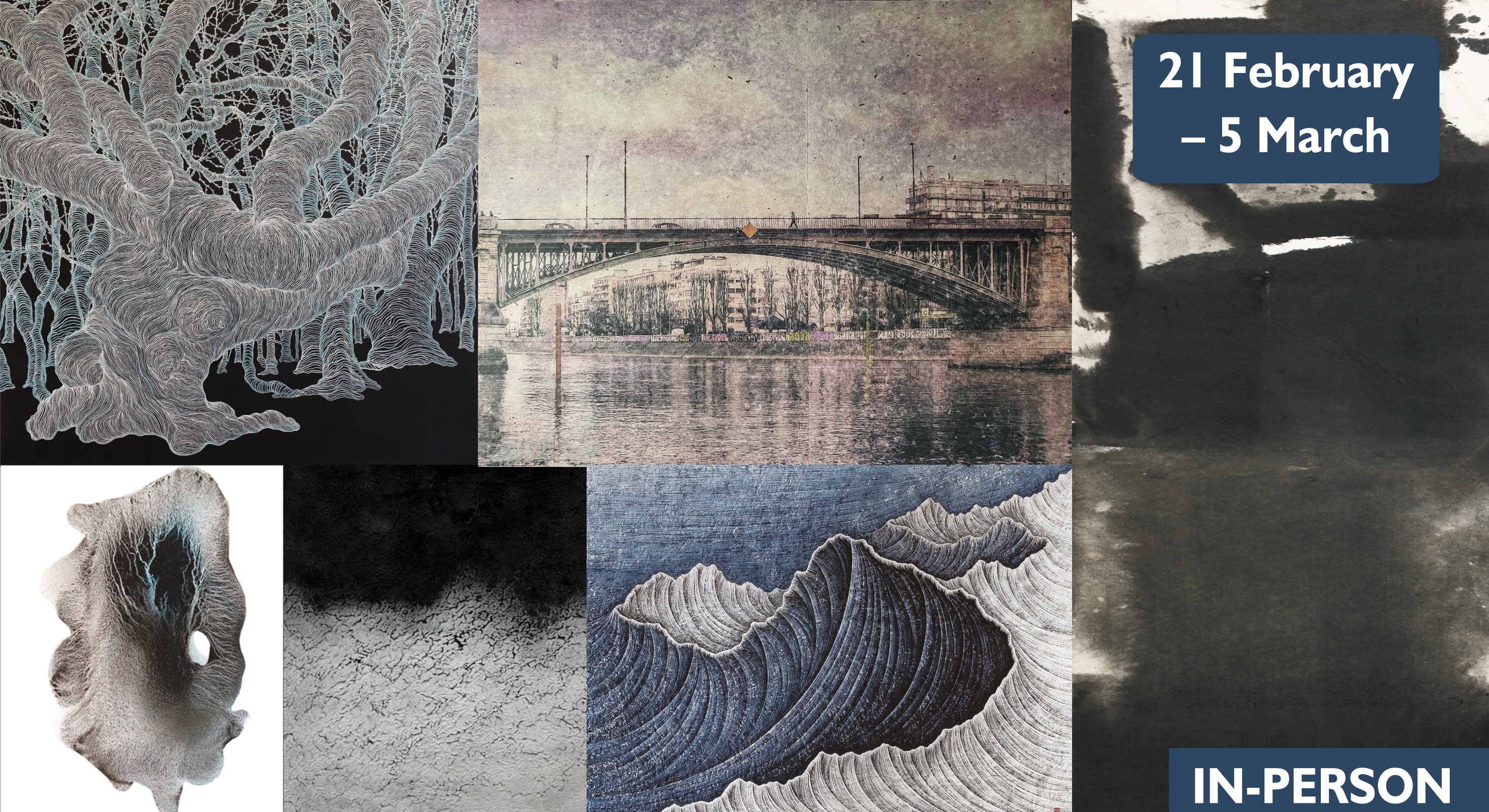
INTERLACE II marks the return of Sonamou, a Korean artists’ collective based in Paris, with an exhibition at the DakshinaChitra Art Gallery in Tamil Nadu in 2026, co-presented by InKo Centre and DakshinaChitra Museum. Bringing together six members of the collective, the exhibition opens a space for artistic dialogue and cultural exchange between India and Korea. Long held as a distant echo—an inner landscape shaped by memory and longing—India becomes, in INTERLACE II, a lived encounter. Through this journey, the artists turn inward to weave connections between two cultures, two worlds and two personal paths. The exhibition unfolds as a shared exploration of resonance, continuity and transformation, inviting viewers into an interlaced narrative shaped by movement, reflection and encounter.
LEE Hyung Joung
MOON Min Soon
LEE-PARK Eun Young
PARK Soo Hwan
HONG ll-hwa
KIM Myoung Nam
On view until Thursday, 5 March 2026.
Entry is free.
InKo Centre presents a series of hands-on workshops led by members of Sonamou offering participants an immersive introduction contemporary Korean artistic practices rooted in tradition, material exploration and personal narrative. All workshops are conducted in person at InKo Centre, Chennai and are open to students, artists and interested participants across skill level
The Interlace II Workshops (23–24 February 2026) present an exceptional opportunity to experience the richness of Korean artistic traditions through the lens of contemporary practice. Led by acclaimed artists, the programme spans photography, paper- making, calligraphy, portraiture and ink painting. Park Soo Hwan offers a compelling photography workshop focused on visual narrative and creative observation, while Lee Hyun Joung introduces participants to the craft and cultural heritage of Hanji, Korea’s traditional handmade paper. Hong Ilhwa explores expressive portrait-making alongside the elegance of Korean calligraphy and master artist Kim Myoung Nam leads an immersive journey into Sumukhwa, the art of Korean ink wash painting—examining its philosophy, materials and techniques through guided, hands-on practice.
Together, these workshops promise a rich, creative exchange celebrating the depth and contemporary relevance of Korean art practices.
Artist: Hong Il-hwa
Duration: 3 hours
Time: 10.00.a.m. - 1.00.p.m.
This workshop introduces participants to modern approaches in Korean calligraphy, blending traditional techniques with contemporary visual expression. Drawing from his long-standing practice across Korea and France, Hong Il-hwa explores rhythm, form and the expressive potential of ink and gesture. Participants will engage in guided exercises that focus on movement, balance and personal interpretation.
Artist: Kim Myoung Nam
Duration: 1 hour
Time: 2.00.p.m. - 3.00.p.m.
This illustrated lecture offers an introduction to Sumukhwa, the Korean tradition of ink painting. Kim Myoung Nam will discuss the philosophical foundations of ink, space, light and shadow, drawing from her own artistic journey and research. The session provides conceptual grounding for the subsequent hands-on workshop.
Artist: Kim Myoung Nam
Duration: 3 hours
Time: 3.00.pm. - 6.00.p.m.
Following the lecture, this practical workshop invites participants to experiment with ink painting techniques, focusing on brush control, tonal variation and the dialogue between black ink and white space. Participants will explore how material sensitivity and inner perception shape visual outcomes.
Limited seats available. Registration is mandatory.
Artist: Hong Il-hwa
Duration: 3 hours
Time: 10.00.a.m. - 1.00.p.m.
This workshop encourages participants to explore self-portraiture as a process of introspection rather than representation. Through guided drawing exercises, Hong Il-hwa leads participants in examining identity, memory and inner landscapes using line, texture and form.
Artist: Lee Hyun Joung
Duration: 3 hours
Time: 10.00.a.m. - 1.00.p.m.
This hands-on workshop introduces participants to Hanji, traditional Korean handmade paper. Lee Hyun Joung will guide participants through the material qualities of Hanji, demonstrating techniques that highlight texture, relief and organic surface patterns. The session emphasizes intuitive mark-making and material-led creation.
Limited seats available. Registration is mandatory.
To register for the workshop, please visit: https://inkocentre.org/Interlace_II.html
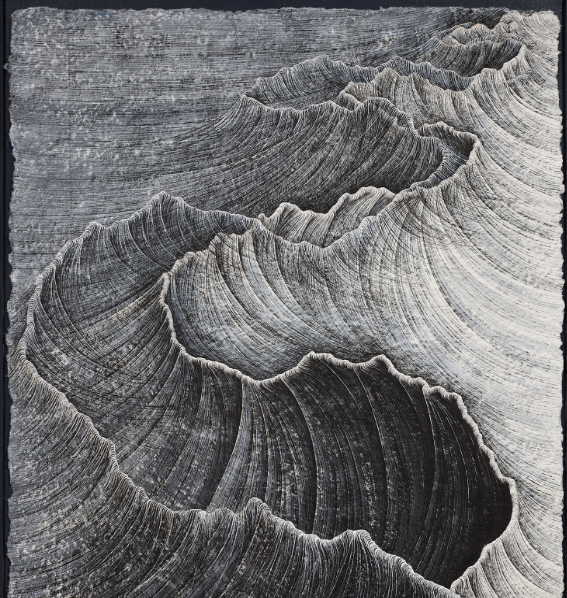
Lee Hyung Joung Born in South Korea and based in Paris, Lee Hyung Joung holds a license in Fine Arts from Sejong University and is trained in goldsmithing. Her work reflects her childhood memories and utilizes traditional Korean materials, specifically Hanji, ink and pigments. Rather than flattening the paper, she allows random embossed designs to appear, using her brush to create rhythmic patterns that emphasize or impede the natural relief of the material without a structured plan.
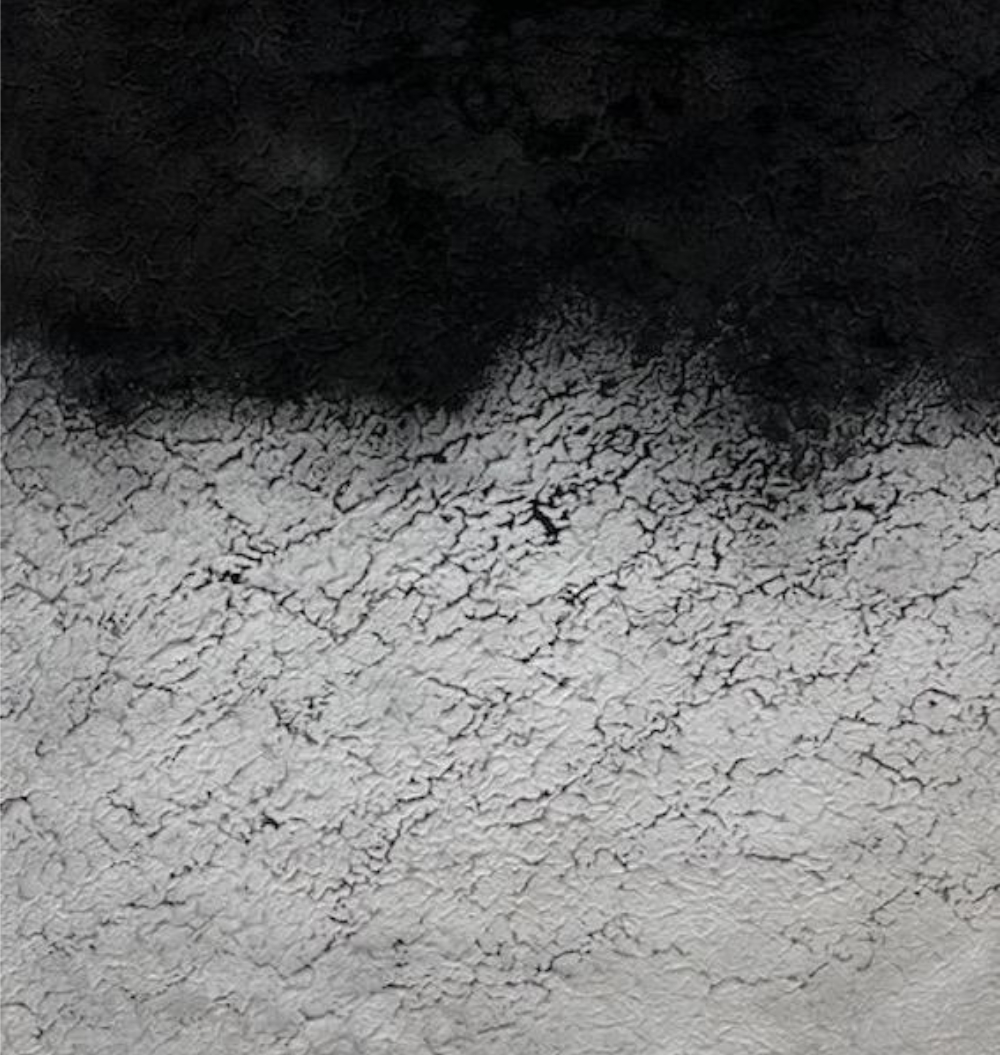
Moon Min Soon I work with natural elements such as fire, smoke, earth, wood and hanji (traditional Korean paper) to question their materiality. This leads to an exploration of their interpenetrability and an interest in the fullness of existence and the abyss of absence. It also moves towards the sublimation of ambivalent feelings and duality and the desire for quiet contemplation. Fire and smoke act as a medium for extinction, paradoxically conveying a sense of fulfillment. The randomness of the work process can be seen as an uncontrollable, senseless flow of free imagination and energy. The traces of smoke show that even though it disappears with the question of time, it still exists and continues.
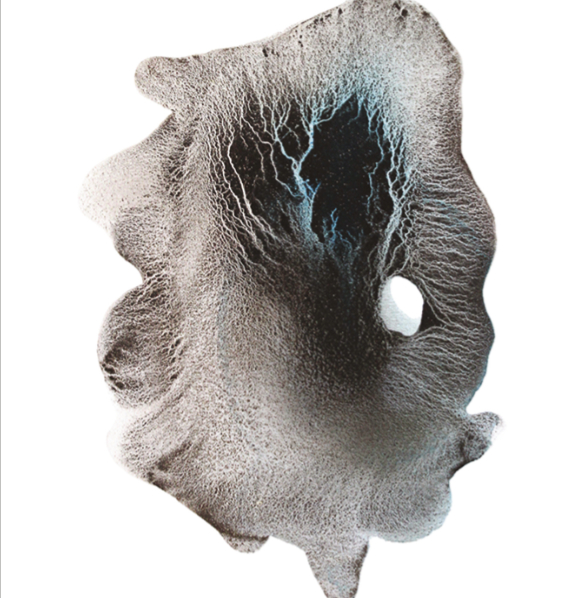
LEE-PARK Eun Young is a visual artist who earned her PhD in Visual Arts from PantheonSorbonne University in 2022. Her work blends therapeutic and liberating improvisational acts with everyday rituals. She frequently employs raw earth—an unconventional material for painting—as her primary medium. Her performances and works have been recognized with awards such as the La nature reprend ses droits prize from the Villa Seurat Foundation.
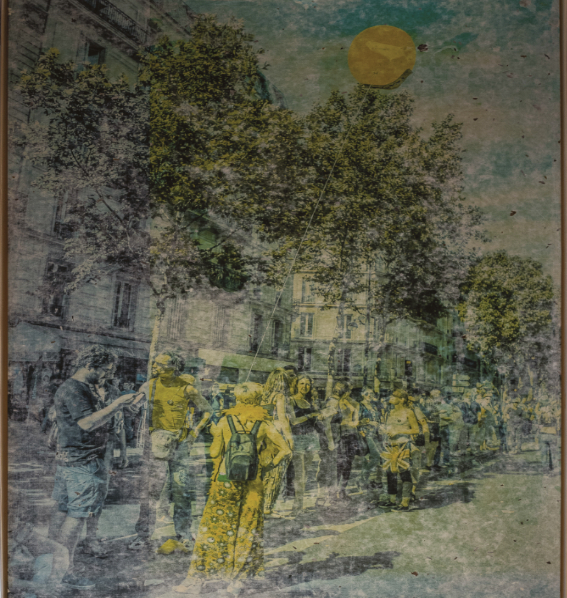
Park Soo Hwan Starting as a musician before expanding into visual arts, Park Soo Hwan explores the coexistence of music and photography. His work captures the collision between temporality and instantaneity, often using vibrations and blurred images to deconstruct objects into visual abstraction. The metronome serves as a crucial motif in his work, acting as a tool for perceiving time and space in the urban environment. He expresses this exploration through Hanji paper, harmonizing Eastern spirituality with contemporary sensibility
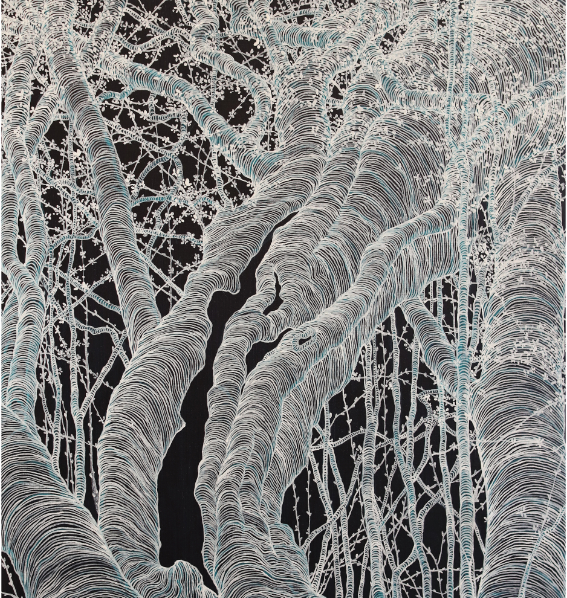
Hong Il-hwa Active in both France and Korea, Hong Il-hwa has held nearly 50 solo exhibitions. His recent work utilizes the metaphor of a tree's life cycle—specifically the concepts of Noon (emergence), Eum (bud) and Ssak (sprout). He depicts the struggle of life emerging from the cold, where the white Eum pushes through the bark to eventually turn blue and take shape as it receives sunlight. He is also a member of the Korean Printmakers Association and has produced murals for Seoul Grand Park Zoo.
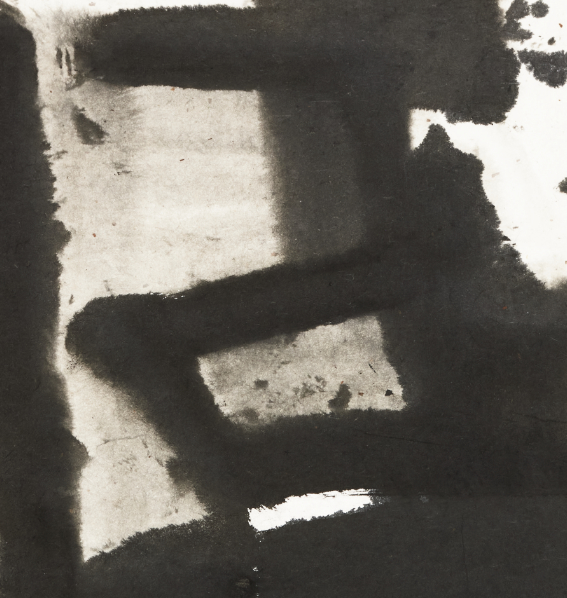
KIM Myoung Nam (Exhibition Commissioner) Kim Myoung Nam is a Professor of Engraving at the School of Fine Arts of Versailles. Her artistic journey is described as a Diary of the Invisible, revealing the inner language of existence. Living with glaucoma led her to contemplate the boundary between light and shadow, resulting in her White Myobop series which explores the immaterial world. Her art acts as a harmony between black ink and white space, serving as a vessel for memory and identity
The SONAMOU artists' association originates from Korea and is based in Paris. Established on August 22, 1991, by 25 Korean artists living in Paris, the group initially founded collaborative workshops in a massive former tank maintenance factory known as Espace Arsenal. Over the decades, it evolved into a multicultural hub where artists of various nationalities collaborated, contributing significantly to the cultural transformation of the Issy-les-Moulineaux district.
Today, restructured as the SONAMOU Association, it remains an influential force in the Korean artistic community in France, promoting the global dissemination of Korean culture and facilitating artistic exchanges beyond geographical boundaries. To date, over 150 artists have been part of SONAMOU, with 60 active members currently based in France.
Exhibition Commissioner: KIM Myoung Nam Email: myoungnam.kim@gmail.com Tel: +33 (0) 613020992
DakshinaChitra is a renowned cultural museum dedicated to showcasing the diverse art, architectureand traditions of South India. The museum offers visitors an immersive experience into the region’s cultural heritage, including folk art, dance, music and craft. Situated on the picturesque East Coast Road in Muttukadu, DakshinaChitra is a must-visit destination for cultural enthusiasts and travelers.
For further information, please contact InKo Centre - T: 044 24361224; E: enquiries@inkocentre.org
We are delighted to announce the opening of two exciting entities at InKo Centre. A revisioned Cafe and Craftshop that aim at beauty and wellness, within, without and all about...
Pure Han- the Craftshop @InKo Centre, presents curated Korean crafts, a Korean traditional wrapping (Bojagi) counter and K-beauty products. With consultation and products on display, the aim is to introduce emerging K-beauty brands to India through informative and experiential pop-up pre-launches.
Flower Brew - the Cafe @ InKo Centre, blends Korea’s iconic "Flower Cafe" culture with urban relaxation. This boutique space, presented in partnership with Flower Power and Chef Cheruba, invites you to enjoy coffee and light bites, while exploring the delicate art of Korean floral design.
Expect minimalist, airy arrangements that emphasize natural movement and soft, palettes. The highlight is the signature K-style wrapping, using layered matte papers and dramatic pleats to turn every bouquet into a fashion-forward gift. Chef Cheruba curates a menu of short eats and specialty beverages that reimagine traditional Korean favourites for the modern palate… a gentle nod to Korean tradition, reimagined for today’s contemporary café-goer.
Watch this space ...
For further information, please contact InKo Centre - T: 044 24361224; E: enquiries@inkocentre.org.